
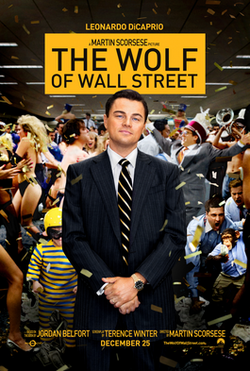
Benchmark report
Wolf of Wall Street
English · Martin Scorsese · 2013 · Drama
Our analysis of a produced screenplay. The script is not hosted, readable or downloadable here.
Exceptional
A ferociously entertaining, tonally assured excess saga built on a magnetic unreliable narrator and razor-sharp dialogue. Episodic structure and deliberate emotional distance are features, not bugs, though they cap engagement for viewers wanting a moral anchor. Elite craft and commercial pedigree.
A rise-and-fall Wall Street excess saga anchored by an unreliable, direct-address narrator. The concept of debauchery-as-spectacle is potent and clear.
Draws on the Scorsese Goodfellas template (voiceover, freeze frames, montage), but the specific milieu and comic tone are distinctive within it.
Prestige director, star vehicle, adapted from a bestseller — obviously highly viable; became a major awards-season release.
Episodic by design, cascading escalation of excess with strong tentpole set pieces. Sags slightly in the Swiss-laundering stretch but recovers.
Jordan is vivid and seductive despite being repellent; Donnie, Naomi, Denham and Max are sharply drawn. Supporting brokers blur together intentionally.
Electric, quotable, rhythmically precise. The Denham yacht scene and the sales-pitch monologues crackle. Deliberately crude but purposeful.
Intentionally keeps us at ironic distance; the divorce and child-custody sequence lands hard, but empathy is limited by design.
Greed, addiction, the seduction of money and American aspiration cohere throughout, culminating in the 'sell me this pen' complicity of the finale.
Masterful control of tone, voice, and visual comedy on the page. The Quaalude sequence and infomercial cutaways show exceptional technical assurance.
Read this first
What a producer would take away in thirty seconds.
This is Terence Winter's screenplay for The Wolf of Wall Street: a first-person, voiceover-driven descent-and-relapse structure built around Jordan Belfort's direct-address narration rather than a conventional plotted arc. The script trades classical scene-to-scene causality for controlled excess — extended montage, direct-to-camera confession, and escalating set-pieces (the dwarf-toss, the Lemmon 714 sequence, the yacht storm) that function as structural pillars in place of traditional midpoint/all-is-lost machinery. It works because the narrator's unreliability and charm are the engine: structure is subordinated to voice, and the voice never falters across 137 pages.
Why this score
An 83 reflects a script that achieves exceptional control of tone and momentum while deliberately loosening classical beat placement — the Save the Cat skeleton is present but stretched and reordered to serve the satire (the 'Break into Two' rebrand at p.21-22 arrives unusually early, and the real midpoint reversal is a hubris peak rather than a disaster). This is a legitimate authorial choice that mostly pays off, but it does mean several mid-film stretches (pp.30-70) run as episodic wealth-porn without a clear rising-stakes throughline until Denham's presence is reintroduced, which is the only real drag on full marks.
Do this next
Ranked by what moves the script most. Start at one.
The single biggest lever
Give Naomi at least one scene of interiority that isn't filtered through Jordan's gaze or V.O. — right now she's introduced as an object of desire (p.1, p.41) and exits as a weapon (p.126-128), and closing that gap does more for the piece's emotional stakes than any other single change.
- 01characterpp. 41–128high impact
Add or expand one scene where Naomi acts without Jordan present or watching — on the phone, with Hildy, with her Aunt Emma — where she articulates what she actually wants for herself and the kids, independent of the marriage's transactional terms.
Why: Naomi is introduced and mostly maintained through Jordan's gaze and V.O. ('a living wet dream,' p.1; 'the Duchess of Bay Ridge,' p.1), so her eventual weaponized divorce scene (p.126-128), while strong, plays as a twist in Jordan's story rather than the payoff of her own.
Payoff: The divorce confrontation becomes inevitable rather than sudden, and Naomi reads as a second protagonist making a choice, not a plot device flipping a switch.
- 02pacing/structurep. 130high impact
Cut the reading down to a single fragment or two, and let Jordan's face/reaction carry the scene — we already understand the stakes from the two prior legal meetings (p.103-104, p.123-124).
Why: The cooperation agreement is read aloud paragraph by paragraph, which is the one moment the film stops to explain its own plot mechanics in flat legal language.
Payoff: Keeps the momentum of Act 3 instead of letting bureaucratic language slow the film right before its emotional pivot into betrayal.
- 03characterpp. 8–112medium impact
Give Max one beat where his warning is met with a concrete consequence in the same scene — not just narration confirming it later — so his function stops feeling purely choric.
Why: Max Belfort is used almost exclusively as a walking theme statement ('the chickens are gonna come home to roost,' repeated verbatim at p.134), with no scene where he's proven right in a way that costs Jordan something specific.
Payoff: Turns Max from a recurring warning-sign into an actual pressure on Jordan's decisions, and earns the repeated line's payoff rather than just restating it.
- 04dialoguep. 83medium impact
Let Saurel volunteer the rathole mechanism through the joke structure already set up ('heaven is a place where...' p.82) rather than Jordan prompting it with a legal question.
Why: The Saurel banking-secrecy exchange (p.83-84) has Jordan ask direct exposition questions ('Under what circumstances would you be obligated to cooperate...') that read as reader-service rather than a man protecting himself.
Payoff: Keeps the scene's comic rhythm intact instead of dipping into an explainer, and makes Jordan look sharper for reading between Saurel's lines instead of asking directly.
- 05characterp. 48medium impact
Add a short beat post-breakup — even a single V.O. line or a glimpse later in the film — acknowledging what happened to her, the way the script does for minor figures like Ben Jenner (p.30-31) or Brad (p.107).
Why: Teresa's marriage ends in under a page of dialogue (p.47-48) after being the story's clearest early moral counterweight (p.11-12, p.19-20), which makes her function feel discarded rather than concluded.
Payoff: Closes a loop the script otherwise leaves oddly open for its most morally legible character, and reinforces the pattern of consequence the film already uses for other discarded people.
- 06dialoguep. 36low impact
Give Max one scene of quiet instead of shouting — the 'Sir Max' phone-persona bit (p.31-32) suggests he has a second gear; use it once in a scene with Jordan directly.
Why: Max's dialogue is almost uniformly expository anger ('This... is obscene.' p.38) without variation in register.
Payoff: Adds texture to a character currently defined by volume, and makes his eventual disgust at the AmEx bill land harder by contrast.
Structure
Where the act breaks actually fall, not where a template says they should.
Act One
pp. 1–29Cold-open dartboard/dwarf spectacle establishes Jordan's persona and the film's confessional-VO mode. Flashback chronicles his innocent start as a Rothschild connector, his corruption by Mark Hanna, and Black Monday wiping out the firm. Forced into penny-stock hustling at Investor's Center, he discovers the commission math, builds his own crew, founds Stratton Oakmont, and rebrands it to target wealthy marks. The act closes with the Forbes 'Wolf of Wall Street' profile.
The Forbes article (pp.27-29) turns private fraud into public spectacle and plants the seed of the FBI investigation — Jordan gets exactly the attention that will destroy him.
The Black Monday crash (p.10-11) is doing double duty as inciting incident — it's the true catalyst, arriving earlier than the Forbes turn. Both work, but you might consider whether the Forbes beat needs more immediate consequence on the page rather than being absorbed into the recruitment montage that follows (pp.29-30) — right now its narrative weight is retroactively assigned by the FBI break room cut (p.71), which is 40+ pages later.
Act Two
pp. 30–121Jordan marries Naomi, and Stratton's excess (the marching band, the shaved head, the ratholes, the Steve Madden IPO) escalates alongside a slow-building law-enforcement threat. Agent Denham's yacht visit (pp.72-77) is the confrontation set-piece; the Swiss laundering scheme with Aunt Emma and Chantalle follows. The back half piles on jeopardy: the near-fatal Lemmon 714 sequence, Brad's arrest, wiretap paranoia, and finally the Mediterranean storm that sinks the Naomi.
The yacht meeting with Denham (pp.72-77) functions as the real midpoint — not a disaster but a false victory: Jordan believes he's out-charmed a federal agent, which is the hubris that guarantees the fall.
This act is the script's longest stretch and its biggest risk — pp.30-70 are largely a 'fun and games' montage of wealth and depravity with limited plot progression. It's sustained entirely by voice and set-piece craft (the quaalude crawl, pp.99-102, is a highlight), but if you're looking to tighten anything, this is where — the Denham thread could be woven in 10-15 pages earlier to give the montage more forward pull.
Act Three
pp. 122–137Jordan is arrested, offered a cooperation deal, and — after a garage-door custody meltdown with Naomi (pp.128-129) — agrees to wear a wire against Donnie and the firm. He warns Donnie via a written note, is caught, and is sentenced to prison. A coda shows him post-release as a motivational-speaking guru, teaching seminar attendees the same salesmanship that built and destroyed him.
Jordan's decision to rat (implied p.130, 'Lemme just sign the fucking thing') is the closest thing to a Break Into Three — a reluctant, morally hollow choice rather than a heroic one, consistent with the character.
The final beat (Jordan onstage: 'Sell me this pen', p.136-137) is an excellent final image — it mirrors the opening dartboard spectacle and confirms the film's thesis that persuasion, not remorse, is what actually survives. This is the script's strongest structural rhyme.
Midpoint · page 75
Jordan invites FBI Agent Denham onto his yacht, attempts a veiled bribe, and taunts him as he leaves — believing he has neutralized the threat.
It's a false-victory midpoint rather than the more common disaster-midpoint: Jordan's arrogance peaks here, and the audience (unlike Jordan) can see this is the moment Denham's resolve hardens into obsession. Everything after is consequence.
Beat sheet
Where the beats land against where they conventionally fall. A deviation isn't automatically a fault.
74/100
Structure adherence
The film hits nearly every Save the Cat beat but treats them loosely and non-linearly, consistent with its confessional-VO structure. The two most displaced beats are Break Into Two (arrives unusually early at p.21-22, once the Stratton rebrand happens) and All Is Lost (arrives late, at the storm/plane-explosion sequence around p.121) — both are justified choices given the film's episodic, biographical shape, but they do mean the middle stretch reads more as sustained tone than escalating structure.
| Beat | Expected | Actual | Quality |
|---|---|---|---|
| Opening ImageThe dwarf-toss/commercial cold open is a near-perfect thesis statement for the whole film delivered before a word of backstory. | p.1 | p.1 | 92 |
| Theme Stated'Money is the oxygen of capitalism' (p.5) states the theme directly through direct address, which suits the confessional mode. | p.7 | p.5 | 85 |
| Set-UpJordan's Bayside origins and Rothschild induction (pp.5-10) efficiently sketch the 'before' world. | p.14 | p.10 | 80 |
| CatalystBlack Monday (p.10-11) ends the legitimate path and forces Jordan toward penny stocks — a clean, forceful catalyst. | p.16 | p.10 | 88 |
| DebateJordan's brief hesitation at Investor's Center ('Who buys this crap?', p.13) is thin — the debate is dispatched in under two pages, which suits the character's lack of conscience but limits dramatic tension here. | p.22 | p.12 | 75 |
| Break Into TwoThe rebrand to 'Stratton Oakmont' targeting the wealthy (pp.21-22) arrives earlier than convention dictates, compressing Act One — a deliberate choice that keeps momentum but means the 'stakes' of Act Two aren't yet clear until Naomi and Denham arrive later. | p.34 | p.21 | 82 |
| B StoryNaomi's introduction at the Hamptons party (pp.41-45) lands almost exactly on schedule and gives the film its emotional throughline. | p.41 | p.41 | 80 |
| Fun and GamesThe 'promise of the premise' (marching bands, strippers, the shaved-head bonus, pp.25-70) is vivid and quotable but runs unusually long without plot escalation — this is the section most likely to feel structurally loose on the page. | p.41 | p.30 | 78 |
| MidpointThe yacht confrontation with Denham is a strong false-victory midpoint, close to schedule. | p.68 | p.75 | 88 |
| Bad Guys Close InSubpoenas, the Lemmon 714 near-catastrophe, Brad's arrest and the wiretap paranoia (pp.90-119) escalate pressure effectively, if episodically. | p.85 | p.90 | 83 |
| All Is LostThe rogue wave sinking the yacht plus the plane explosion 'sign from God' (p.121) arrives later than convention — but the delay is earned by the preceding drug/marriage chaos, and the on-the-nose literalism (a literal sign from God) is a knowing joke the script is fully aware of. | p.103 | p.121 | 80 |
| Dark Night of the SoulJordan's brief reckoning (deciding whether to fight or cooperate, pp.123-124) is compressed and quickly undercut by the 'Show Goes On' speech having already happened earlier (p.104-107) — the film essentially front-loads its false-redemption beat, which slightly weakens this later, quieter version. | p.110 | p.123 | 70 |
| Break Into ThreeSigning the cooperation agreement (p.130) is a hollow, coerced decision rather than an active choice — appropriate to character, but it makes the turn into Act Three feel more like capitulation than momentum. | p.112 | p.130 | 75 |
| FinaleThe wire, the note to Donnie, the arrest for tipping him off, and the sentencing (pp.132-136) deliver the moral consequence efficiently and without sentimentality. | p.118 | p.132 | 85 |
| Final Image'Sell me this pen' bookends the opening dartboard pitch — Jordan's punishment is revealed to be no punishment at all, which is the script's sharpest and most cynical structural rhyme. | p.136 | p.137 | 90 |
Pacing
fast, propulsive, and relentlessly episodic
the script sustains velocity via montage and VO for ~100 pages before slowing into the marriage/legal collapse in the back third
rushed · pp. 3–20
the entire origin—Investor's Center, Donnie's recruitment, founding of Stratton—blows by in rapid-fire scenes with almost no breathing room
Fix: let at least one early scene (e.g. the Investor's Center pitch) play out in real time so the audience feels the con being learned rather than told about it
slow · pp. 195–210
the Lemmons/choking sequence and the yacht storm run long relative to their plot weight, stretching a comic detour into two extended set-pieces back to back
Fix: trim the crawling/rolling-down-stairs beat or the storm sequence so the two comic-disaster set pieces don't both get full-scene treatment
rushed · pp. 230–247
the marriage's collapse, the betrayal of Donnie, arrest, sentencing and arrival in prison all compress into a handful of pages after 200+ pages of indulgence
Fix: give the Naomi confrontation and the Donnie betrayal a beat of aftermath before cutting to sentencing, so the fall registers as consequence rather than a summary
Conflict
How hard the opposing force presses — a different curve from pacing.
external pressure stays low and deniable for most of the script, spiking only when Denham or Naomi directly confront Jordan
Peak · page 230
Naomi's divorce announcement and the custody standoff over Skylar in the garage
Protagonist arc
Jordan Belfort · arc 25/100
the arc is deliberately anti-redemptive — Jordan rises, gorges, gets caught, betrays everyone, and lands upright as a rich motivational speaker, so his 'low point' never produces change
Emotional rhythm
What the audience feels, page by page — not what the characters feel.
the film weaponizes fun and complicity for most of its length, only souring late, then refuses the audience even that catharsis in the final scene
Characters
Want, need and flaw — and whether the script knows the difference.
Jordan Belfort
protagonistWants
To keep escalating the money, the drugs, the power, and the adoration of the room he built
Needs
To choose accountability and intimacy over spectacle before it costs him his family and freedom
Flaw
Believes his own narration — that charisma and self-justification can outrun consequence
The direct-to-camera device (p.1-14, p.115-119) is your strongest tool and your biggest risk: it lets Jordan sell us the same way he sells clients, but by Act 3 (p.130-134) he's still narrating his own downfall with the same ironic detachment he used to narrate his rise. The device never buckles under him, so his 'need' — real reckoning — is stated (prison yard epiphany, p.134) but not dramatized as a cost he feels.
Donnie Azoff
co-lead / catalystWants
To be Jordan's equal and be seen as indispensable
Needs
To develop judgment independent of Jordan's approval
Flaw
Impulsive loyalty that curdles into recklessness (goldfish, p.126; the phone call to Saurel, p.99; Brad standoff, p.91-92)
Donnie is a brilliant chaos engine scene to scene but he doesn't change — he's the same reckless id at the wire-tap sushi lunch (p.131) as he was at the diner (p.15-16). Consider one scene where Donnie makes an independent choice that isn't either slavish loyalty or self-sabotage, so his eventual silent 'thank you' (p.131) lands as growth rather than habit.
Naomi
deuteragonist / mirrorWants
The lifestyle, the status, the version of Jordan she fell for at the party (p.41-42)
Needs
Autonomy and safety for her children, independent of Jordan's orbit
Flaw
Uses seduction and provocation as her only lever of power, which finally weaponizes against her in the divorce scene
The divorce/dirty-talk scene (p.126-128) is genuinely uncomfortable in the best way — it shows exactly how their marriage's currency (performance, control, sex-as-transaction) turns lethal. But almost everything we know about Naomi before that comes filtered through Jordan's V.O. ('a living wet dream,' p.1; 'the hottest blonde ever,' p.41). Give her one scene without Jordan in the room — even a phone call — so her turn doesn't feel purely reactive to his fall.
Agent Denham
antagonistWants
To bring down Stratton and be the guy who caught Belfort
Needs
To recognize that righteousness doesn't equal reward
Flaw
Pride — he takes Jordan's bait about the subway life just enough to reveal he's stung by it (p.72-77)
The yacht scene (p.72-77) is the best-written dialogue exchange in this excerpt — two men fencing without raising their voices. The subway bookend (p.134) pays it off cleanly. He's underused elsewhere; his offscreen momentum (wiretaps, subpoenas) is mostly reported via Jordan's V.O. rather than dramatized, which slightly flattens him into a device rather than a rival.
Teresa
first wife / discarded conscienceWants
A stable, honest marriage with the man she married before the money
Needs
To leave before he destroys her too
Flaw
None fatal — she's the clearest-eyed character in the piece, which is why she's dispatched by page 48
Teresa's kitchen scene (p.11-12) and the 'why can't you be legitimate now' exchange (p.19-20) do real work establishing the moral stakes early. Her exit (p.47-48) happens in under a page and she never appears again. That's a legitimate authorial choice (she's not the story) but it means the film's only unimpeachable moral voice disappears fastest — worth being deliberate that this is the point, not an oversight.
Casting
Who could carry these roles. Starting points to verify — not attachments, and not endorsements.
Austin Butler
as Jordan Belfort
Has shown he can carry manic, seductive-monster energy (Elvis) while staying legible as a performer selling himself to a camera — suits the direct-address device.
Nicholas Braun
as Donnie Azoff
Comic timing for the goldfish/wire-tap beats, plus the ability to turn a scene queasy fast, which Donnie's crack-pipe and choking sequences need.
Sydney Sweeney
as Naomi
Can play the deliberate performance of desirability (the balcony intro, p.41) while letting the calculation underneath show through in the divorce scene without tipping into camp.
Oscar Isaac
as Agent Denham
Dry, controlled menace that would make the yacht scene (p.72-77) a genuine two-hander rather than a comic aside — he can hold silence against a louder actor.
Bill Camp
as Max Belfort
Can make the 'Sir Max' British-accent bit (p.31-32) feel like a real psychological tic rather than a punchline, giving Max more dimension than the page currently affords him.
Dialogue
Dialogue-forward with dense action blocks in montage/party sequences; V.O. narration functions as a third channel running over both, often doing explanatory work that dialogue is not asked to carry.
6/100
Subtext
9/100
Voice
Voice is exceptional — every broker, banker and hooker-tier joke lands in a specific register, and Jordan's V.O. has real comic music. But subtext is intentionally low: characters (and the narration) frequently tell us exactly what they want and why in the same breath they're doing it ('I need to keep them chasing the dream,' p.38). That's a deliberate satirical choice — Wall Street here doesn't do subtlety — but it means the few scenes that do work through subtext (Denham on the yacht, p.72-77; Jordan/Donnie's wire scene, p.131) stand out sharply, and there's a case for finding two or three more of those.
Lines that land
“There is no nobility in poverty. I've been rich, and I've been poor and I choose rich every time.”
Jordan · p.68
The thesis statement of the whole piece, delivered as a rallying cry rather than a confession — it's the moment the audience is meant to feel both persuaded and implicated.
“Sell me this pen.”
Jordan · p.135
Four words that close the film on pure, undiluted technique — no remorse, no lesson, just the machine still running. Ruthlessly efficient ending beat.
“Stability, dear. Family.”
Aunt Emma · p.87
A callback to the fake Stratton ad's tagline ('Stability. Integrity. Pride.' p.1) turned into genuine, quiet blessing/curse — one of the few places subtext does the work instead of narration.
“I'm gonna give you a pass.”
Brad · p.92
Donnie repeats it back three times before detonating — the escalation through repetition is sharp, unshowy comic dialogue construction worth studying elsewhere in the draft.
Lines to fix
“Under what circumstances would you be obligated to cooperate with an FBI or U.S. Justice Department investigation?”
Jordan · p.83
This reads as a plot-mechanics question dressed as dialogue — Jordan asks it like a reader who needs the rathole scheme explained, not like a man protecting himself. Let Saurel volunteer the mechanism unprompted, or have Jordan probe sideways the way he does with Denham on the yacht.
“Paragraph 1. The defendant shall plead guilty to all counts of the indictment currently pending against him...”
Lucas Solomon · p.130
Four numbered paragraphs read aloud in sequence is legally accurate but dramatically inert — it's the one place the V.O./document device (used so well elsewhere, e.g., the Amex bill breakdown p.36) goes flat instead of ironic. Consider intercutting Jordan's face/interior reaction against only fragments of the legalese rather than the full read.
“You don't think there's any end in sight, do you? It's all one giant party to you schmendricks!”
Max · p.36
Max exists almost entirely to state the moral warning aloud ('the chickens are gonna come home to roost,' repeated verbatim at p.134) — effective once, but he has no other function, so each appearance risks feeling like an insert of the theme rather than a person.
Scene audit
17 scenes that decide whether this works — and whether each earns its place.
| Pg | Scene | What it does | Tension | Verdict |
|---|---|---|---|---|
| 2 | STRATTON OAKMONT III - BULLPEN (dwarf-tossing cold open) | establish anarchic tone and Jordan's showman persona before any backstoryFreeze-frame into direct-address VO is the film's whole method in miniature. | 75accelerates | essential |
| 6 | L.F. ROTHSCHILD BULLPEN - Mark Hanna intro | seduce Jordan (and us) into the drugs/money ethos via a mentor figureHanna's chest-thump speech plants every theme the movie will spend two hours proving true. | 55accelerates | essential |
| 10 | L.F. ROTHSCHILD BULLPEN - Black Monday | yank the rug out and force Jordan down-marketFast, brutal reversal that justifies the pivot to penny stocks without over-explaining. | 60accelerates | essential |
| 13 | INVESTOR'S CENTER - Jordan's first pink-sheet sale | show the exact mechanics of the scam being bornThe phone call is the movie's real origin scene, more important than the wedding or the yacht. | 50maintains | essential |
| 21 | STRATTON OAKMONT I - 'Urgency' sales training intercut | teach the audience the pitch technique via repetition across timeClever structurally but the intercut runs long (pp.21-25); trimming one or two client call-backs would tighten pace without losing the lesson. | 40maintains | works |
| 29 | Forbes profile / job applicants flooding the lobby | turn bad press into rocket fuel, escalate scaleEfficient time-jump engine, though 'twisted Robin Hood' line does the theme's heavy lifting almost too plainly. | 45accelerates | works |
| 41 | South Hampton beach party - Naomi arrival | introduce the femme fatale and seed the coming marriage collapseDonnie masturbating in the crowd and Teresa's silent reaction do more character work than the dialogue itself. | 55maintains | essential |
| 67 | STEVE MADDEN IPO speech ('telephone is the great equalizer') | the film's rhetorical centerpiece, Jordan at peak seductive powerThis is the scene the whole script has been building toward tonally; cutting it would gut the movie's argument. | 85accelerates | essential |
| 72 | Yacht confrontation with Agent Denham | first direct antagonist collision, establishes cat-and-mouse dynamicThe bribery-that-isn't-quite-a-bribery exchange is the sharpest dialogue scene in the draft. | 70maintains | essential |
| 93 | Lemmon 714 quaalude / crawl-to-car sequence | comic centerpiece dramatizing addiction's physical tollJustifiably famous set piece but at nearly six pages (93-99) it's the single longest indulgence in the draft; a page could come out of the stairwell beat without losing the joke. | 65decelerates | works |
| 104 | 'The show goes on' - Jordan refuses to walk away | pivotal decision point that seals his downfallClean hubris turn; his reversal mid-speech is the clearest character beat in the script. | 80accelerates | essential |
| 108 | Mediterranean storm on the yacht | literalize the 'you're going down' metaphor via disaster set pieceVivid but purely spectacle; the plane explosion coda oversells the 'sign from God' beat the narration already states outright. | 60decelerates | trim |
| 118 | 'Straight Line Persuasion' infomercial insert | ironic flash-forward undercutting Jordan's supposed reformEffective irony but arrives with little transition from the domestic plot; a tighter cutaway would land the joke faster. | 30decelerates | trim |
| 125 | Naomi divorce fight / Jordan grabs Skylar and crashes the garage | personal rock-bottom, marriage and family collapse in real timeThe most genuinely frightening scene in the script; the tonal register shift from comedy to violence lands hard because it's earned. | 90accelerates | essential |
| 131 | Wire betrayal - Jordan passes the note to Donnie | the friendship's final, quiet betrayalUnderstated compared to the excess around it, which is exactly why it cuts deeper. | 75maintains | essential |
| 135 | Sentencing and prison montage | consequence delivered with almost no weight, deliberately anticlimacticThe tennis-in-prison beat (p.134) is a sharp, cynical punchline but risks feeling like a shrug after 130 pages of escalation. | 35decelerates | works |
| 136 | Seminar coda - 'Sell me this pen' | close the loop, indict the audience along with JordanThe final direct-address to camera is the correct, damning last image; earns its ambiguity. | 50maintains | essential |
What's working
Keep these. A rewrite that loses them is a worse draft.
The direct-address engine
Jordan speaking to camera (p.1-14, p.68, p.115-119, p.135) is confident, controlled, and tonally consistent from the opening Gene Hackman parody to the final 'Sell me this pen.' It's the device that makes complicity the audience's problem, not just Jordan's, and it never wobbles technically across 137 pages.
Escalation through repetition
The structure repeatedly uses tricolon/repeated-beat patterns to build comic momentum — the three IPO pitch intercuts (p.24), the Steve Madden speech's product-name escalation (p.67-69), Donnie's 'pass' repetition (p.92). These aren't isolated jokes, they're a consistent rhythmic device that gives scenes propulsion without needing plot.
The Denham yacht scene
Pages 72-77 are the tightest dialogue sequence in the excerpt — two men who each know exactly what the other is doing, playing a long game through hospitality and insult. It's proof the script can do restraint when it chooses to, which makes the louder scenes read as choice rather than limitation.
Market
Primary audience: critics
Audience
Adults 18-45, particularly male-skewing but with strong crossover; viewers drawn to dark comedy, antihero narratives, and 'true crime capitalism' stories
Budget band
High (studio-scale, based on the material's actual $100M production - relevant here for positioning comps)
Trend
Evergreen: financial-crime antihero dramas resurface cyclically (Big Short, Billions, Succession-adjacent appetite); this remains a reference title buyers cite when pitching similar material
Risks
- Extreme content (drugs, sex, language) caps mass/family reach and invites censorship cuts in several markets
- Unlikeable protagonist with no redemption arc risks alienating audiences seeking moral catharsis
- Runtime and episodic, repetitive structure (party->crime->party) demand a starmaking lead performance to sustain 3 acts
Working in its favour
- Lean festival/critical push and awards-season positioning rather than four-quadrant marketing
- Use starpower and directorial pedigree to sell the satire angle over the debauchery
- Trim/pace the mid-section excess for territories with stricter content thresholds
Commercial intelligence
What a financier asks before they read page one.
Franchise potential
StandaloneThis is a self-contained biographical account of one man's rise and fall; there's no series engine, ensemble spin-off potential, or open world here. Belfort's own post-script motivational-speaker career (pgs 134-137) closes the loop rather than opening one.
International viability
The rags-to-riches-to-ruin arc and satire of capitalism translate broadly, but the specifically American Wall Street mechanics (pink sheets, IPOs, SEC/FBI procedure) require some cultural fluency to fully land, and the extreme sex/drug content will trigger cuts or ratings restrictions in conservative markets
Travels on
Strong markets
Needs context
Investment readiness
Low-moderate · Ready for packagingThis is adapted from a bestselling memoir with a built-in title/IP recognition, a starring role that functions as awards-bait, and a clear directorial lane (satirical, kinetic, voice-over-driven biographical crime comedy). The commercial risk sits almost entirely in content rating and runtime discipline, not in the underlying material's marketability.
Needs attached
Comparables
Illustrative, not claims of influence — verify before you put them in a pitch.
Goodfellas 1990
Same first-person voice-over structure, criminal rise-and-fall arc, and freeze-frame/direct-address technique
Boiler Room 2000
Same milieu of predatory penny-stock brokerages and testosterone-fuelled bullpen sales culture
The Big Short 2015
Shares the satirical take on Wall Street excess and direct-to-camera explanation of financial mechanics
Blow 2001
Comparable drug-fuelled rise-and-fall biographical structure with a charismatic, unreliable narrator
Whose film this reads like
Martin Scorsese (Goodfellas/Casino era)
55%International
The freeze-frames, rapid-fire voice-over, fourth-wall breaks, needle-drop-driven momentum and morally unrepentant narrator are direct descendants of this sensibility, evident from the opening TV-commercial cold open through the closing seminar scene
Adam McKay (satirical finance explainer mode)
20%International
Direct-to-camera financial explanation ('an IPO is...') and self-aware narrator asides breaking down fraud mechanics mirror this comedic-essayistic approach
David O. Russell (chaotic ensemble farce)
15%Regional
The frenetic bullpen ensemble scenes and overlapping absurdist dialogue (dwarf-tossing planning scene, pg 32-34) carry this loose, improv-heavy chaos
Terry Gilliam (grotesque excess)
10%Regional
The Quaalude sequences and hallucinatory physical comedy (crawling down stairs, pg 97-98) push into exaggerated grotesque farce
Written by AI on the draft you uploaded. Page numbers refer to that file. Comparables, directors and market notes are illustrative starting points to verify — not endorsements, and not a promise that anyone will buy it.
Analysed by SceneOne AI. A guide for creators, not a guarantee, the industry decides.
This is a sample
The same report, on your script.
Every axis, beat, pacing flag and rewrite priority you just read — written about your own draft, with your page numbers. Upload is free and your work is certified the moment it lands.